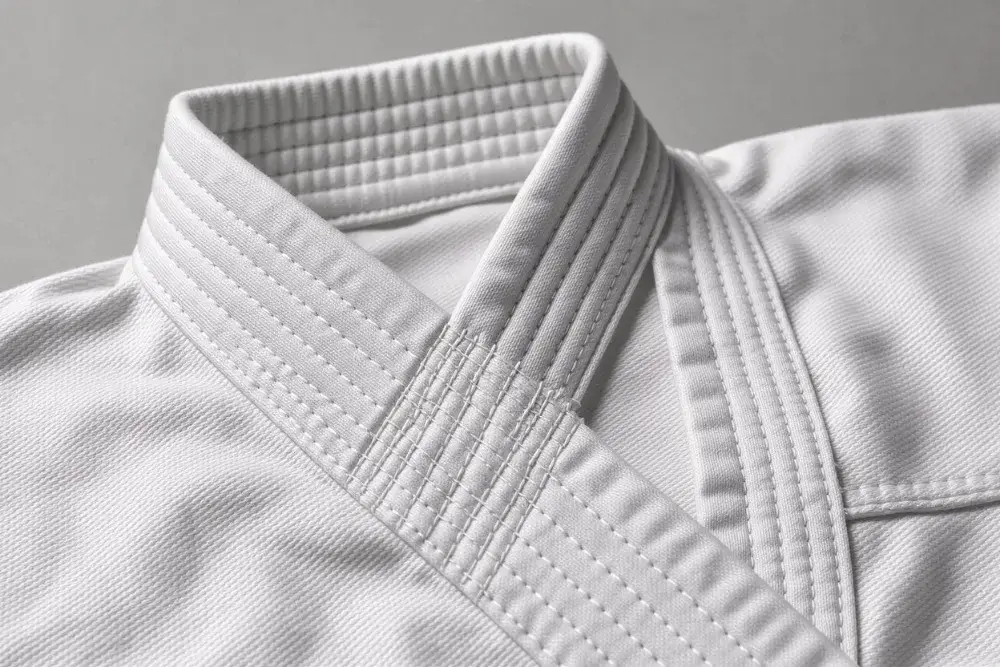
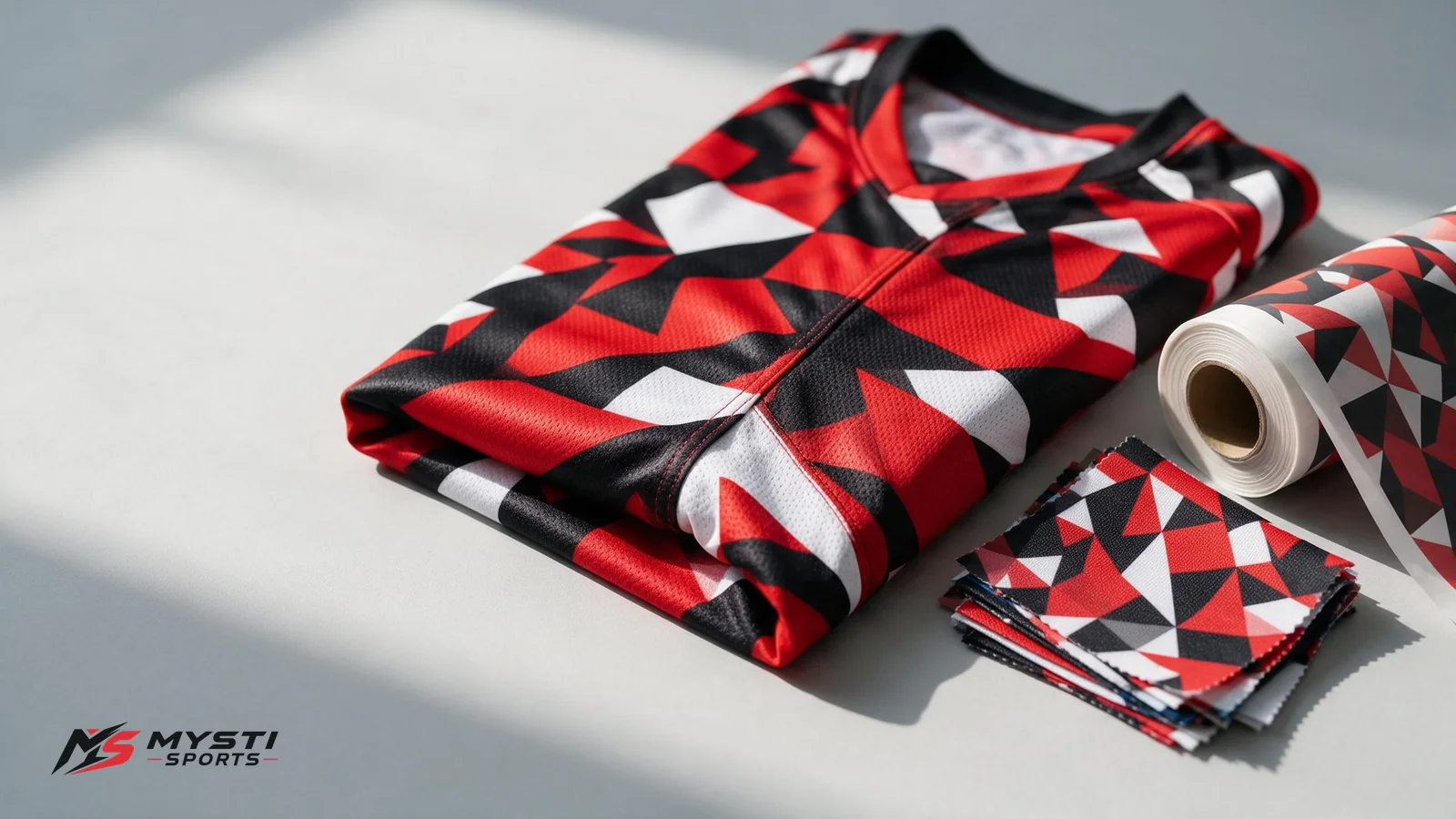
So, what is a sublimated jersey? It’s a jersey with its whole design dyed into the fabric instead of printed on top. That’s why the colours don’t crack or peel, and why the jersey feels as light as the plain fabric. We make sublimated jerseys in our own factory, so this guide explains how it’s actually done on a factory floor.
It also covers the part most sellers skip: what sublimation can’t do, and the one question to ask a supplier so you don’t end up with white creases under the arms.
Quick answer
A sublimated jersey is a polyester jersey whose design, colours, names and numbers are dyed into the fibres using heat. The ink becomes part of the fabric, so it can’t crack, peel or wash off, and it adds no weight. It only works on polyester.
What does “sublimated jersey” mean?
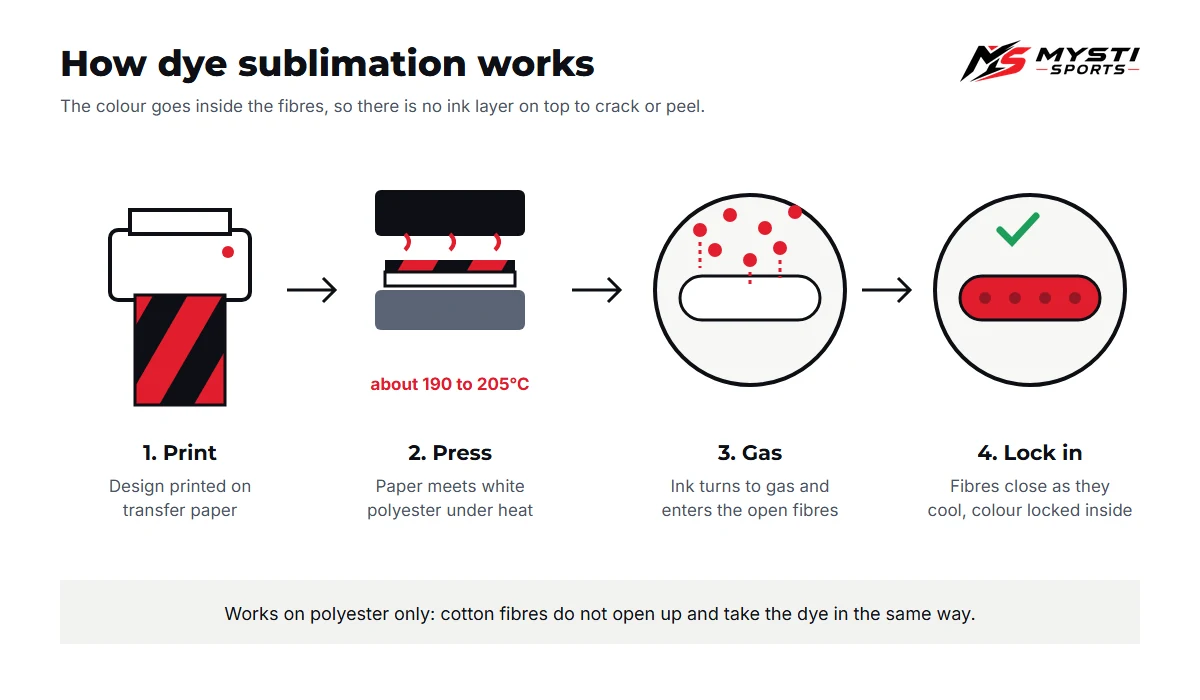
“Sublimated” describes how the colour gets into the fabric. The design is printed onto special transfer paper with sublimation ink. The paper is then pressed against white polyester under heat and pressure, usually somewhere around 190 to 205°C for less than a minute.
The heat turns the ink straight into a gas without it becoming a liquid first. That’s what “sublimation” means. The gas moves into the polyester fibres, which open up slightly when they’re hot. As the fabric cools, the fibres close and lock the colour inside.
So there’s no layer of ink sitting on the surface. Run your hand over a sublimated jersey and it feels exactly like the fabric did before it was printed.
Why it only works on polyester
Sublimation ink bonds with polyester, a synthetic fibre that opens up under heat. Cotton is a natural fibre and doesn’t take the dye the same way, so the print washes out quickly. Blends work only partly: a 50/50 cotton mix gives a faded, vintage look. For bright, lasting colour you want 100% polyester, or something very close to it.
That suits sportswear well. Polyester is light, dries fast and wicks sweat, which is what you want in a jersey anyway. For a deeper explanation of the printing technology itself, Wikipedia’s dye-sublimation page is a good neutral starting point.
How a sublimated jersey is made: our process, step by step
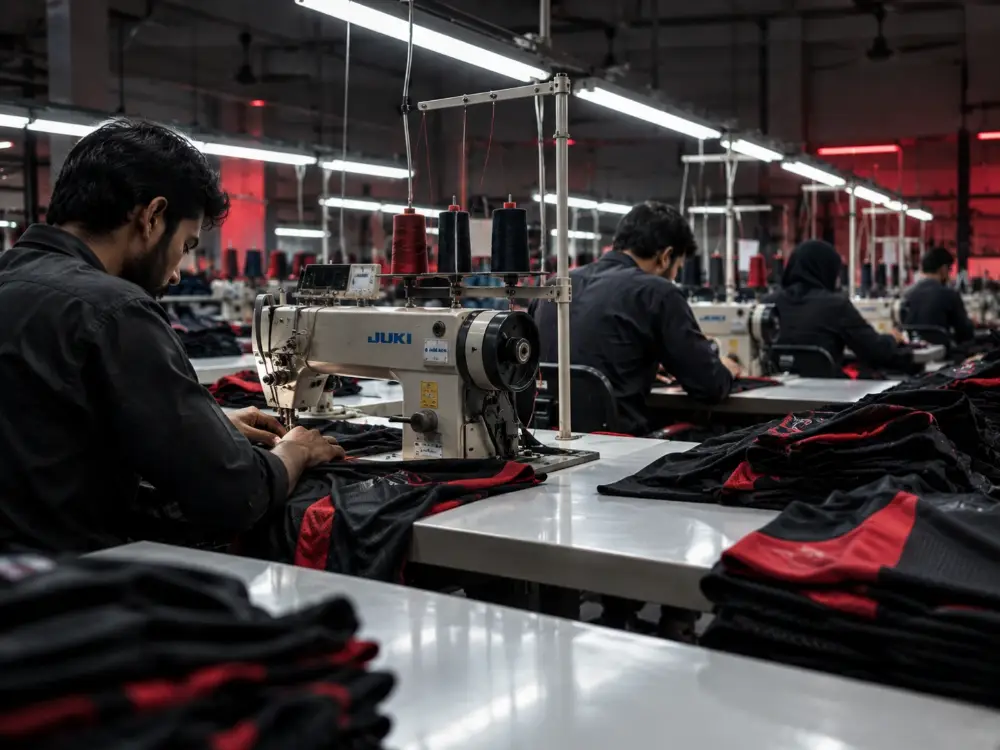
Here’s how a team order moves through our factory, from your artwork to a finished jersey.
- Artwork on the panel template. We place your design on the actual pattern pieces for your style and sizes: front, back, sleeves and collar. Each piece is a separate print file.
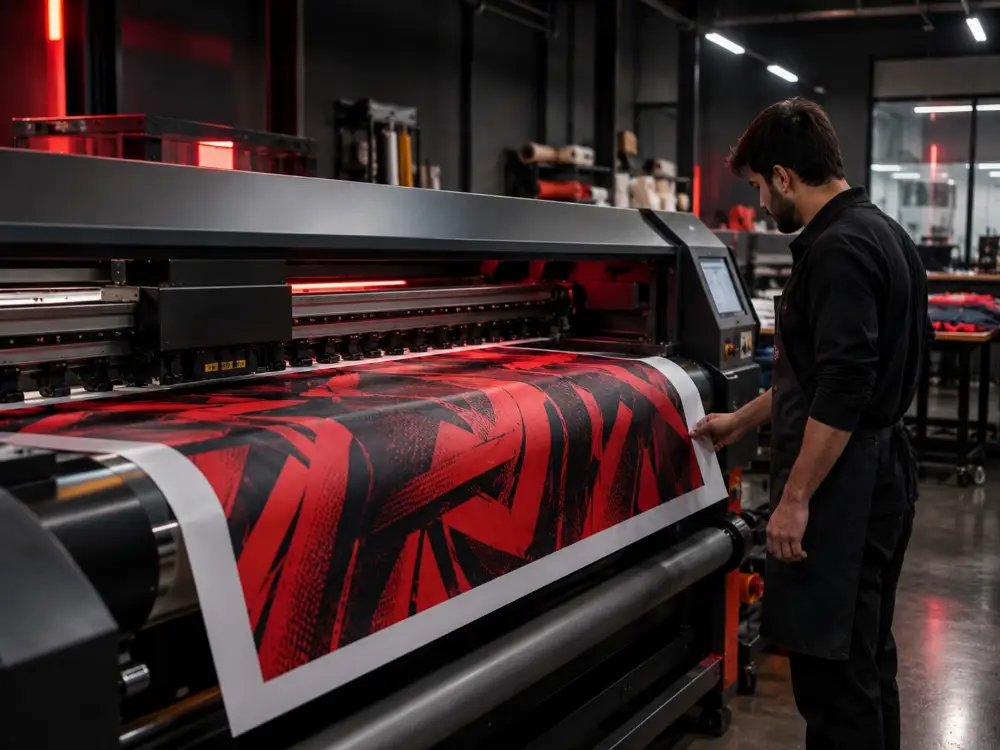
- Printing on transfer paper. The files print onto rolls of transfer paper on our high-speed Japanese sublimation printers. The print is a mirror image, because it flips when it’s pressed.
- Heat press onto white fabric. The paper and the white polyester go through the heat press together. This is the moment the colour moves into the fabric.
- Cutting the panels. The printed fabric is cut into panels. Laser cutting seals the edges of polyester as it cuts, so they don’t fray.
- Sewing. The panels are sewn into jerseys. Because the fabric was printed before it was cut, the pattern runs right up to every seam.
- Inspection. Every order is checked to an AQL standard before it ships: colour, print alignment across seams, stitching, sizes and names and numbers.
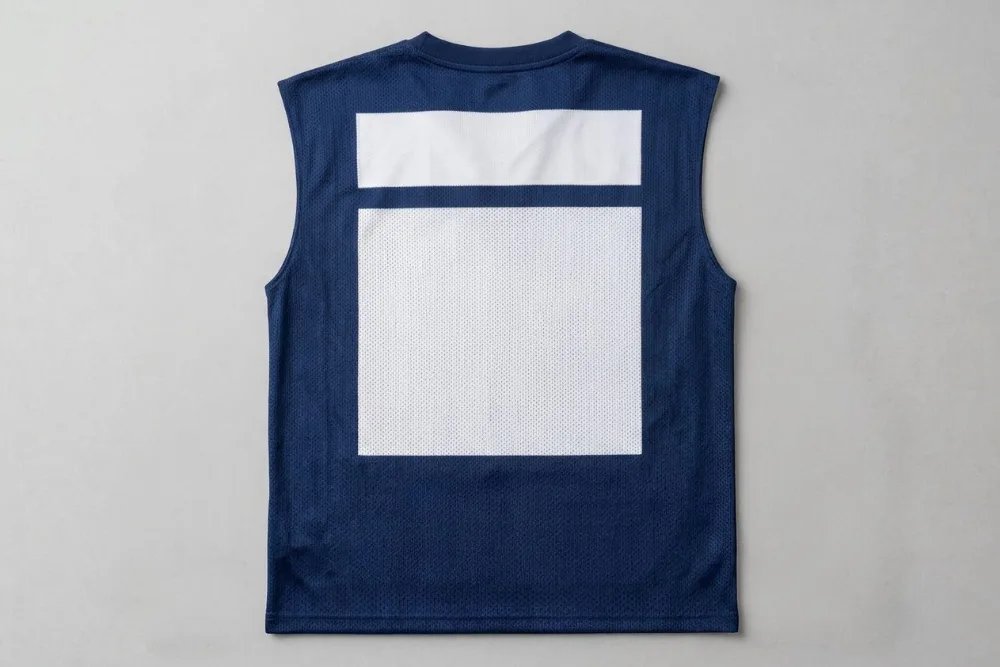
Names and numbers are printed with the panel itself, so they can’t peel off like a heat-transfer number can. It’s one reason the uniform rules are easy to meet with sublimated flag football uniforms.
Cut-and-sew vs pressed on a blank: ask which you’re getting
Not every “sublimated jersey” is made the same way, and this is the difference that matters most.
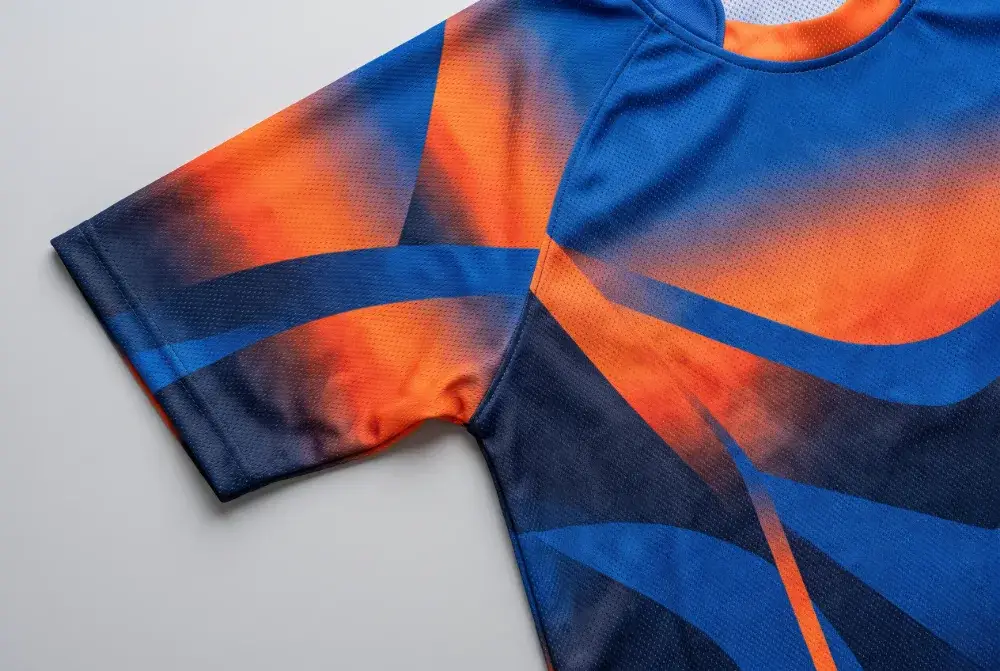
Cut-and-sew sublimation prints the fabric first, then cuts and sews it. The design covers every millimetre of the jersey, including under the arms and across the side seams. That’s the method described above, and it’s how full team kits should be made.
Pressed on a blank means a finished white jersey is laid in a press and printed. It’s quicker for one-off shirts, but the press can’t reach into folds, seams and underarms. That leaves white streaks and creases wherever the fabric was folded or stitched.
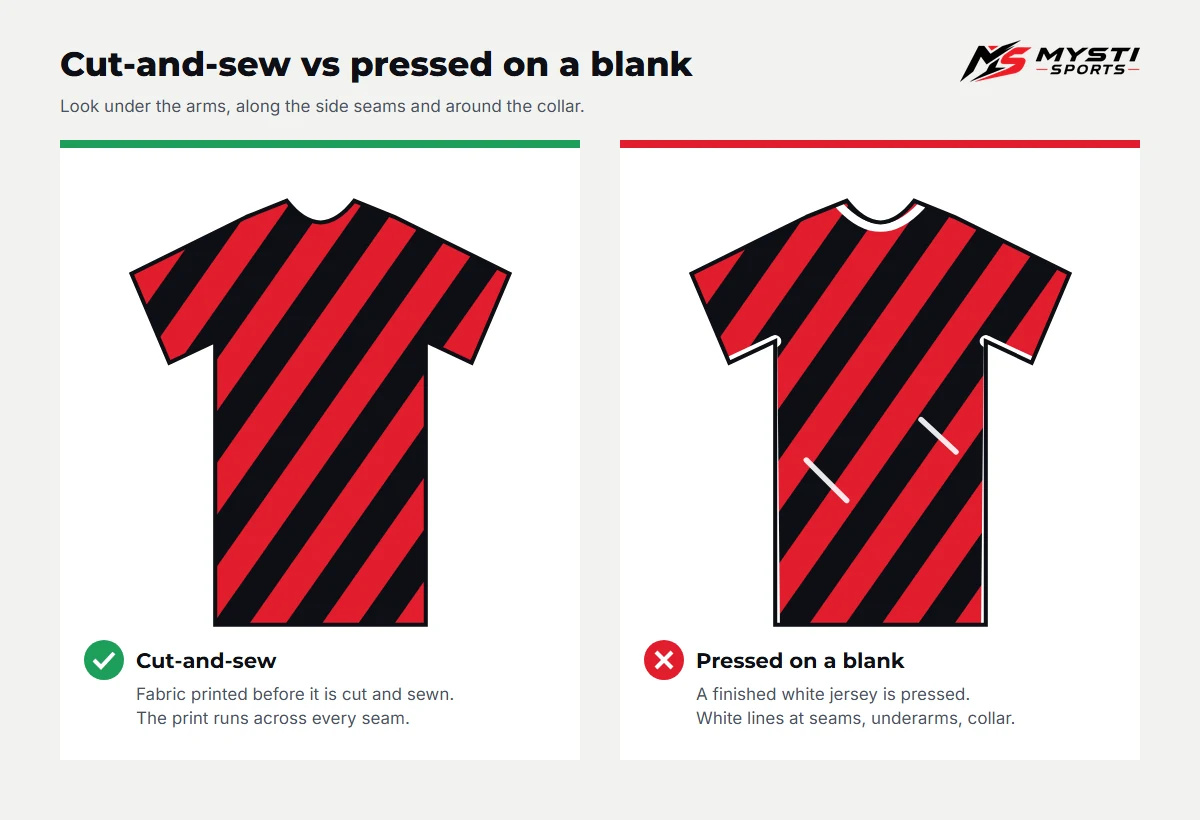
To check a sample, look under the arms, along the side seams and around the collar. White lines or gaps there mean it was pressed on a blank. So ask every supplier this, word for word: “Do you print the fabric before cutting, or press finished blank jerseys?”
The good and the honest limits
Sublimation is the best choice for most team kits, but it isn’t perfect. Here’s both sides.
What’s good about it
- It won’t crack or peel, because there’s no ink layer on top to crack.
- It adds no weight and doesn’t block the fabric, so the jersey still breathes.
- Colours and logos are unlimited. Gradients, photos and fine detail cost the same as one flat colour.
- Every shirt can be different. Names and numbers print with the panel at no extra setup cost.
If you’re ordering sublimated soccer jerseys, this is what keeps the crest, sponsor and numbers intact through a season of washing.
The honest limits
- Polyester only. If you want a cotton feel, sublimation isn’t the right method.
- Very dark colours need care. A true deep black can come out as a very dark grey. Ask for a printed swatch of your darkest shades before bulk.
- White fibres can show when the fabric is stretched hard or scuffed, because the yarn underneath started white. Choosing the right fabric for the sport keeps this to a minimum.
- Direct heat can damage it. An iron pressed straight onto the print can blur the design, so care matters.
Sublimation vs screen printing vs embroidery vs tackle twill
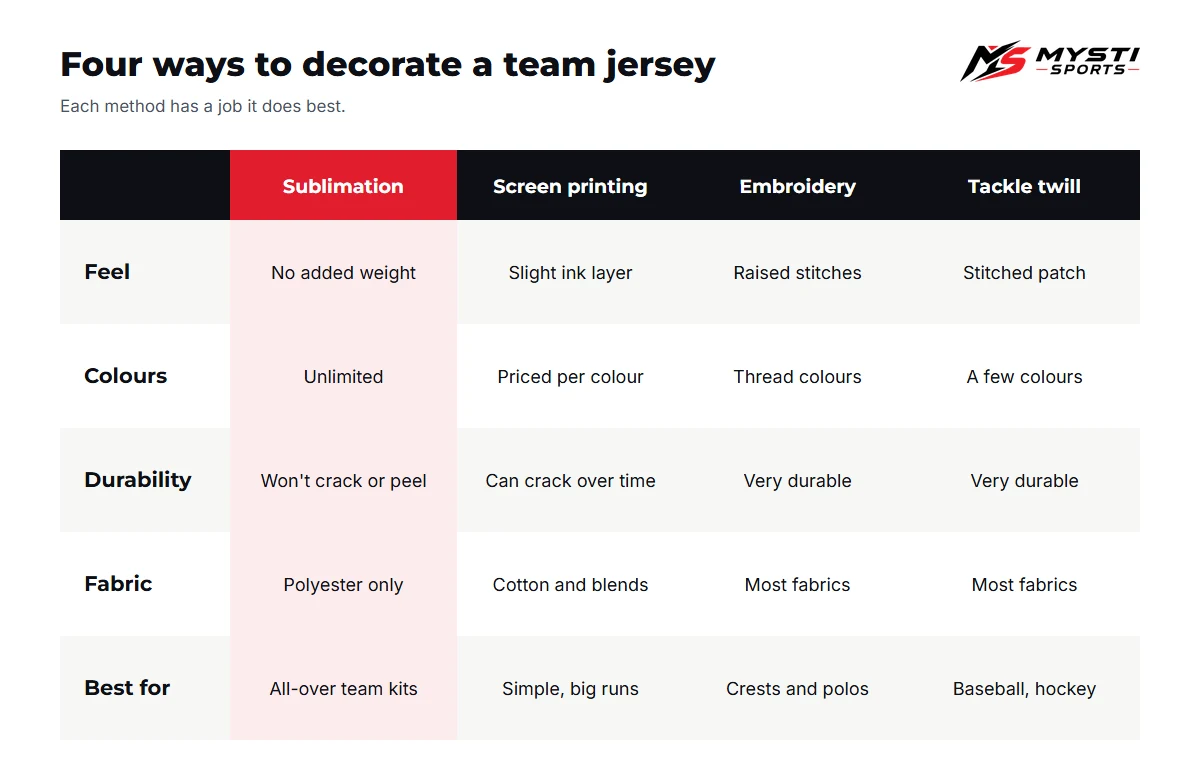
Each decoration method has a job it does best. Here’s how they compare for team jerseys.
| Sublimation | Screen printing | Embroidery | Tackle twill | |
|---|---|---|---|---|
| Feel | No added weight | Slight ink layer | Raised stitches | Stitched fabric patch |
| Colours | Unlimited | Priced per colour | Limited by thread colours | A few fabric colours |
| Durability | Won’t crack or peel | Can crack over time | Very durable | Very durable |
| Fabric | Polyester only | Cotton, blends, polyester | Most fabrics | Most fabrics |
| Best for | All-over team kits | Simple designs in big runs | Crests, polos, jackets | Classic baseball and hockey |
On cost, the logic is simple. Screen printing needs a screen for every colour, so it gets cheaper the more shirts you print with the same simple design. Sublimation has no screens and no per-colour charge. For a run of 30 jerseys with a busy design, sublimation usually costs less. For 300 shirts with a one-colour logo, screen printing can win.
Sublimated vs tackle twill
Tackle twill is cut fabric letters and numbers stitched onto the jersey. It has a raised, traditional look that a lot of baseball and hockey teams love. You don’t have to choose one or the other, though. Many baseball jerseys use both: a sublimated body for the pattern, with stitched twill numbers for the classic look.
Getting the colours right
The colour on your screen isn’t the colour on the fabric. Screens make colour with light, while fabric shows colour with dye, so some bright screen colours can’t be matched exactly in print.
Here’s how to get close and stay consistent:
- Give Pantone references for your key colours, not just a hex code from a screen.
- Approve a printed swatch or sample before bulk. Check it in daylight, not under office lights.
- Keep the approved file. Ask your supplier to keep the print file and colour settings from the approved order, so a reorder next season matches the first one.
Send the artwork already placed on our panel template if you can. Our tech pack guide covers the file setup.
How to care for a sublimated jersey
Sublimated jerseys are easy to look after. Copy this list into your message to players and parents:
- Turn the jersey inside out before washing.
- Wash cold or warm, with similar colours.
- No bleach and no fabric softener.
- Hang to dry, or tumble dry on low.
- Never iron the printed side.
Frequently asked questions
Are sublimated jerseys better than stitched jerseys?
For full-colour designs, usually yes. They’re lighter, they breathe, nothing can peel, and every shirt can carry its own name and number at no extra setup cost. Stitched tackle twill has a raised, traditional look and lasts for years, so many baseball and hockey teams combine a sublimated body with stitched numbers.
Are sublimated jerseys cheaper?
Often, for small runs with busy designs. There are no screens and no charge per colour, and names and numbers print with the panel. For a big run of a simple one-colour logo, screen printing can work out cheaper, especially on cotton shirts.
Do sublimated jerseys fade?
Not the way surface prints do, because the dye sits inside the fibre rather than on top. With normal care the colours stay bright for many seasons. Bleach, very hot washes, ironing the print and long hours in strong sun can dull them over time, so wash inside out and hang to dry.
Can you sublimate on cotton?
Not properly. Sublimation dye bonds with polyester, and cotton fibres don’t take it in the same way, so the print washes out. A 50/50 blend gives a faded, vintage look at best. For cotton garments, screen printing or embroidery is the better choice.
What’s the minimum order for custom sublimated jerseys?
With us it’s 30 to 50 pieces per design, spread across sizes XS to 3XL, and every shirt can have its own name and number. We make a printed sample first, which takes 7 to 10 working days after you approve the artwork.
Want to see the difference for yourself? Send us your design or a sketch, and we’ll make a printed sample before you commit. Request a printed sample.
Ready to make your first sample?
Send us your tech pack, or just a sketch and your logo. We prepare the tech pack for your approval, then make a physical sample before bulk.
More guides
Manufacturing Guides
How to Start a Clothing Brand: A Sportswear Founder’s Guide From the Factory Floor
How to start your own clothing brand in sportswear: the real order of steps, print-on-demand vs a factory, timelines, and the mistakes…
Manufacturing Guides
How Much Does It Cost to Start a Clothing Brand? A Sportswear Budget, Line by Line
A line-by-line budget for launching a sportswear brand: samples, production, shipping, duties, branding, website and launch costs, plus a free planner.

Manufacturing Guides
Girls Flag Football Uniforms: The Rules, the Fit and When to Order
What makes a girls flag football uniform legal, how to pick colours around the flag belt, home and away kits, fit for…